Zygomatic implants take a different anatomical path. They are longer than standard implants and angled upward to anchor into the dense bone of the cheekbone (zygoma) — bypassing the deteriorated upper jaw entirely.
Advanced implant solutions using zygomatic implants — no bone grafting required in many cases.
Same-day fixed teeth for patients told they “don’t have enough bone” — from San Diego’s specialist-led implant center, WINPLANTS Digital 3D Dentistry
Zygomatic implants are a specialized solution for patients who have experienced significant bone loss in the upper jaw. Instead of relying on traditional implant placement in the jawbone, these extra-long implants anchor into the zygoma (cheekbone) — providing a rock-solid foundation without the need for extensive bone grafting.
The cheekbone is one of the densest, most reliable structures in the skull, and it rarely loses density the way the upper jaw does. By anchoring into this stable foundation, we can deliver same-day fixed teeth to patients who would otherwise face months of bone grafting, multiple surgeries, and extended healing before even being considered for traditional implants.
This procedure was specifically developed for patients who’ve been told they’re not candidates for implants — and at WINPLANTS, it’s one of our signature specialty procedures. Fewer than a handful of practices in San Diego offer zygomatic implants at all, and Dr. Jonathan M.Winfield’s advanced training in full-arch rehabilitation and complex implant techniques makes
him one of the few specialists in the region performing this procedure routinely.
Most zygomatic cases are paired with All-on-X full-arch restoration, allowing patients to leave the same day with a complete, fixed smile.
The zygoma is different. This dense cheekbone maintains its volume and strength throughout life, regardless of how long your teeth have been missing. Zygomatic implants — significantly longer than conventional implants — pass through or alongside the deficient upper jaw and anchor firmly in this permanent structure.
The result: immediate stability strong enough to support fixed teeth the same day, even in patients with virtually no upper jawbone remaining.
Zygomatic implant surgery is not a weekend-course procedure. Only a small fraction of implant providers nationwide are trained and qualified to place them, and even fewer perform them routinely. Choosing the right specialist is the single most important decision in your zygomatic journey.
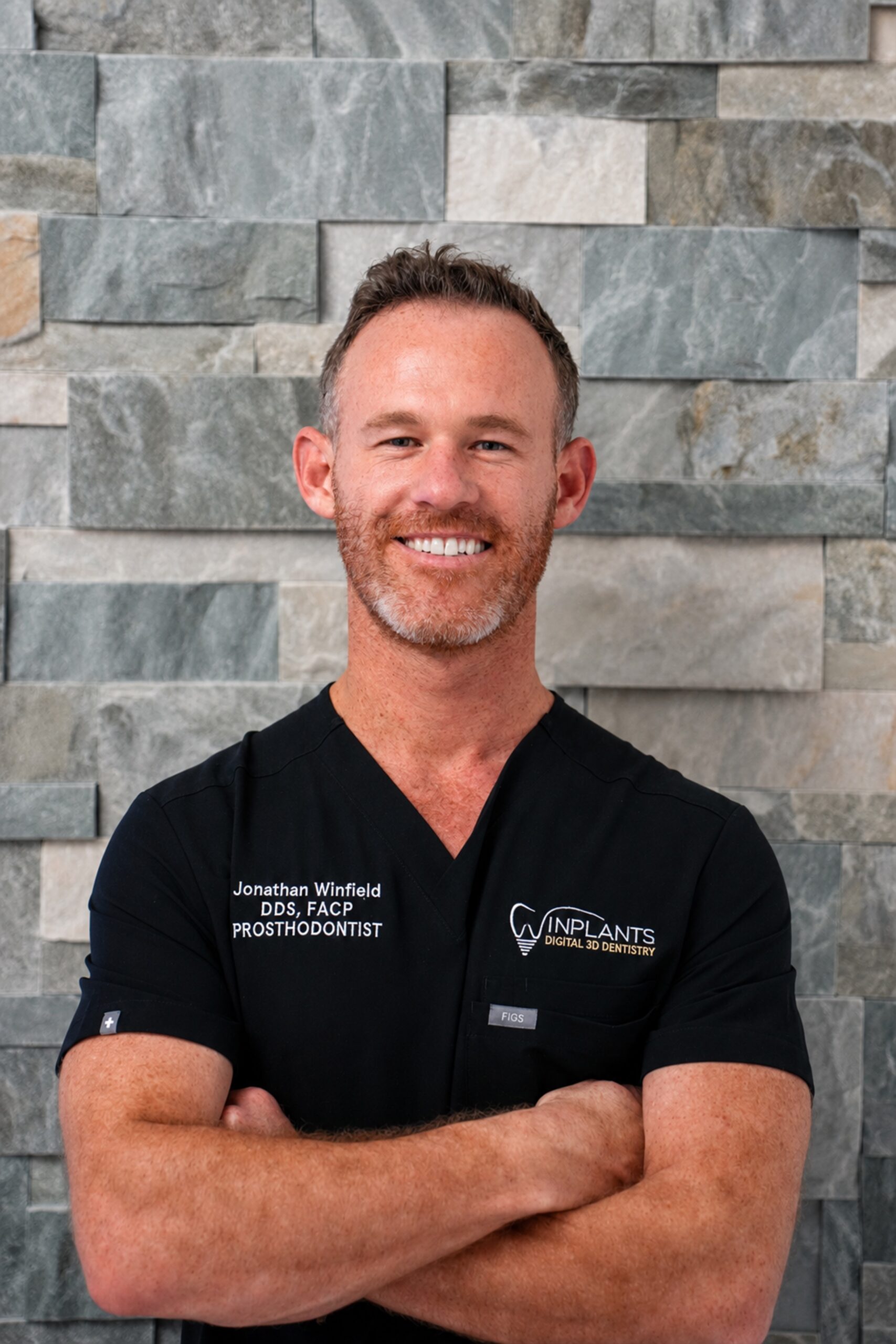
Dr. Jonathan M. Winfield, DDS, FACP is a Board-Certified Prosthodontist and Diplomate of the American Board of Prosthodontics — the dental specialty dedicated to complex restoration and full-mouth rehabilitation. He earned his B.S. in Pharmacological Chemistry from UC San Diego, his Doctor of Dental Surgery from the University of the Pacific, and completed an advanced prosthodontics residency at the University of Illinois Chicago, with specialized focus on full-mouth rehabilitation, digital dentistry, and implant surgery. He is also trained in IV conscious moderate sedation, so your comfort is managed by the same specialist planning your surgery.
At WINPLANTS, that specialist expertise is amplified by technology few practices possess: CBCT imaging, photogrammetry, guided digital surgery, and in-house 3D printing — thecomplete digital workflow behind the WINPLANTS name. It’s the combination that lets us take on the complex cases others turn away: severe bone loss, failed implant repairs, and full-mouth reconstruction.
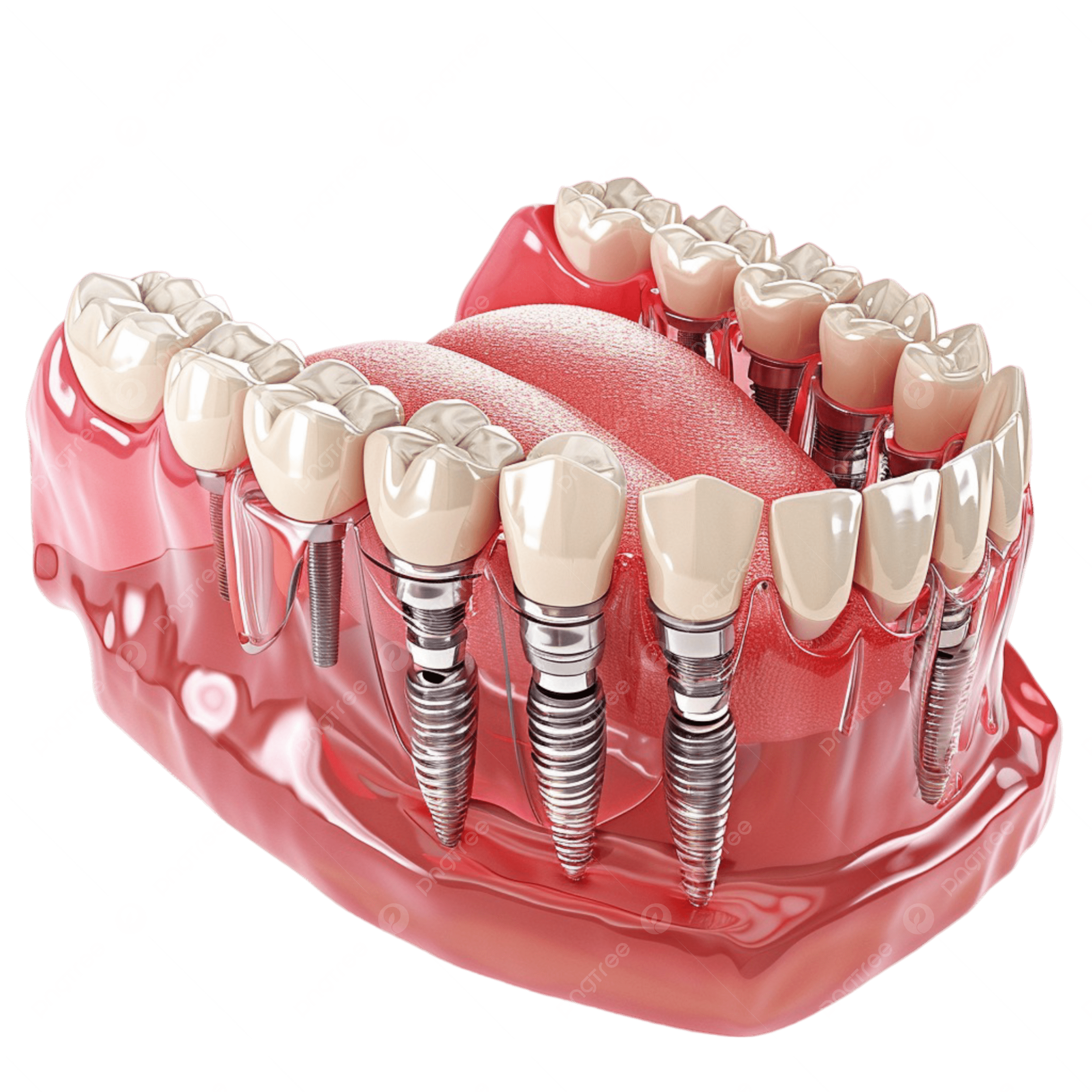
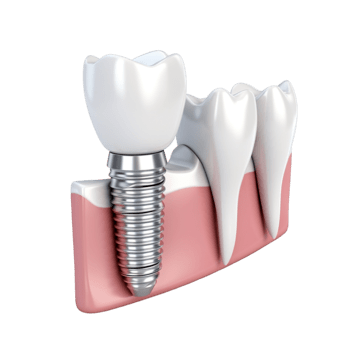
Traditional dental implants are placed into the alveolar bone of the upper jaw. When this bone has resorbed (deteriorated), there’s not enough volume to support standard implants — which is why many patients are told they need bone grafting.
Zygomatic implants take a different anatomical path. They are longer than standard implants and angled upward to anchor into the dense bone of the cheekbone (zygoma) — bypassing the deteriorated upper jaw entirely.
Specially engineered length to reach the cheekbone
Placed at a specific angle to maximize bone-to-implant contact
The zygoma is dense and resistant to resorption
Sufficient stability for immediate-load same-day teeth
Depending on how much bone remains, Dr. Winfield may recommend a hybrid approach (zygomatic implants in the back, conventional implants in the front) or a quad zygoma configuration (four zygomatic implants) for patients with no usable upper jawbone at all. Your free 3D CBCT scan will show exactly what’s possible for your anatomy — even if you’ve been told “no” elsewhere.
Zygomatic implants may be right for you if you:
Have been told you don’t have enough bone for dental implants
Have worn an upper denture for years and experienced significant bone loss
Have had previous implants fail in the upper jaw
Have lost upper-jaw bone to gum disease, trauma, or resorption
Want fixed, non-removable teeth without bone grafting or a sinus lift
Have been turned away by other implant providers
For many patients, skipping the grafting marathon doesn’t just save time and discomfort — it makes the overall treatment more predictable and often more economical.
For decades, the only path for severe upper-jaw bone loss was major grafting — sometimes harvesting bone from the hip — followed by many months of healing before implants could even be attempted. Zygomatic implants changed that.
Long-term studies show zygomatic implants achieve success rates comparable to conventional
implants — around 95–98% — when placed by properly trained specialists.
Zygomatic implant placement is genuinely advanced surgery — the implants are anchored millimeters from delicate anatomy, which is exactly why so few providers offer it and why digital precision matters so much. Every zygomatic case at WINPLANTS is planned and executed through our complete digital workflow:
A CBCT scan and intraoral scans map your sinuses, remaining bone, and cheekbone anatomy in precise detail.
Dr. Winfield plans your exact implant positions virtually — before surgery ever begins — using digital smile design and photogrammetry so your final teeth are engineered to fit your face.
Under IV sedation, failing teeth are removed and your zygomatic (and any conventional) implants are placed in a single visit. In most cases, a fixed provisional bridge is attached before you go home — teeth in a day.
Over the following months, your implants integrate while you wear your fixed provisional. Then we deliver your custom, shade-matched zirconia bridge — precision-crafted through our in-house digital fabrication.
Yes — this is exactly who zygomatic implants were developed for. Many of our zygomatic patients were turned away by other providers, sometimes more than once. A 3D CBCT scan of your cheekbone anatomy tells the real story, and the consultation to find out is free.
Most patients are surprised: recovery is typically far more comfortable than major bone grafting would have been, and IV sedation keeps you relaxed and comfortable throughout the surgery itself. Swelling and bruising for a few days is normal and usually manageable with over-the-counter pain relief.
If you’ve been told you don’t have enough bone for implants, don’t accept a removable denture as your only option. Start with a complimentary virtual consultation or book your in-office exam and free 3D CBCT scan with San Diego’s implant specialist.
WINPLANTS Digital 3D Dentistry — Winfield Dental Group 1111 6th Avenue, Suite 102, San Diego, CA 92101
Board-Certified Specialist · Zygomatic & All-on-X Implants · Fully Digital Workflow · Same-Day Teeth · IV Sedation · Virtual Consultations
Office Hours: Monday–Thursday, 7:00 AM – 3:00 PM · Closed Friday, Saturday & Sunday
"*" indicates required fields