Which Is Right for You? Two ways to replace a missing tooth — with very different consequences for the two teeth next to it.
When you’re missing a single tooth, or two to three teeth in a row, two options dominate the conversation: a dental implant or a traditional dental bridge. They can look similar in the mirror, but they are fundamentally different treatments with very different long-term consequences for your oral health — and your wallet.
Multiple Teeth Missing?
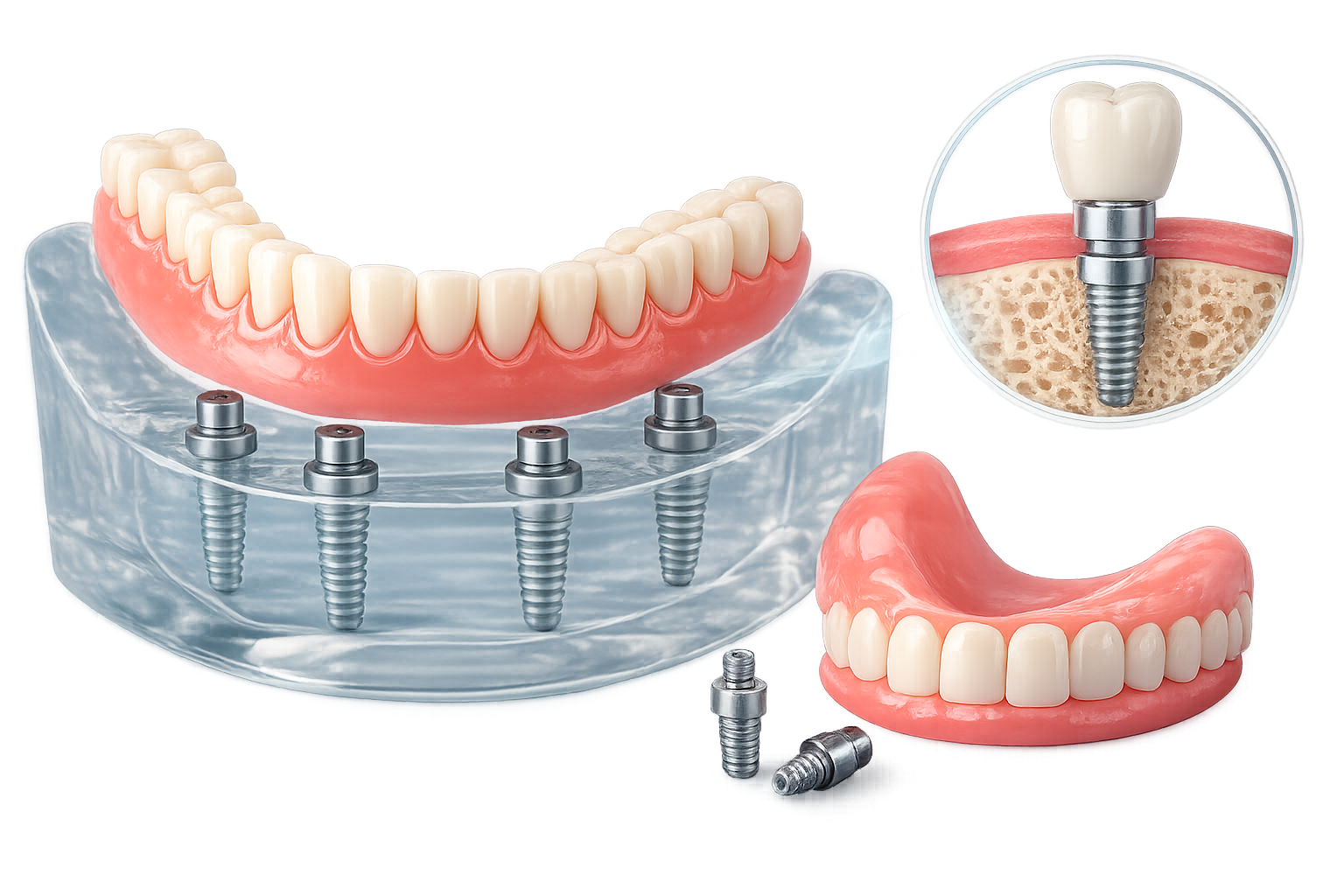
For 3+ adjacent teeth, implant-supported bridges combine the best of both.
A single dental implant is a titanium post placed directly into your jawbone, restored with a custom abutment and crown. It stands alone — completely independent of your other teeth —
and functions like a new tooth root.
A traditional bridge is a multi-tooth restoration anchored on the two teeth adjacent to the gap. Those anchor teeth must be ground down so crowns can fit over them, and the crowns hold a “pontic” — a replacement tooth — suspended in between. The bridge only works because two
other teeth carry it.
On paper, the bridge looks cheaper upfront. But that’s only the beginning of the story.
The single biggest difference between implants and bridges is what happens to the healthy teeth next to your missing one. The anatomy makes the choice clear.
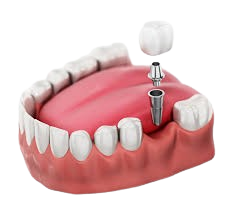
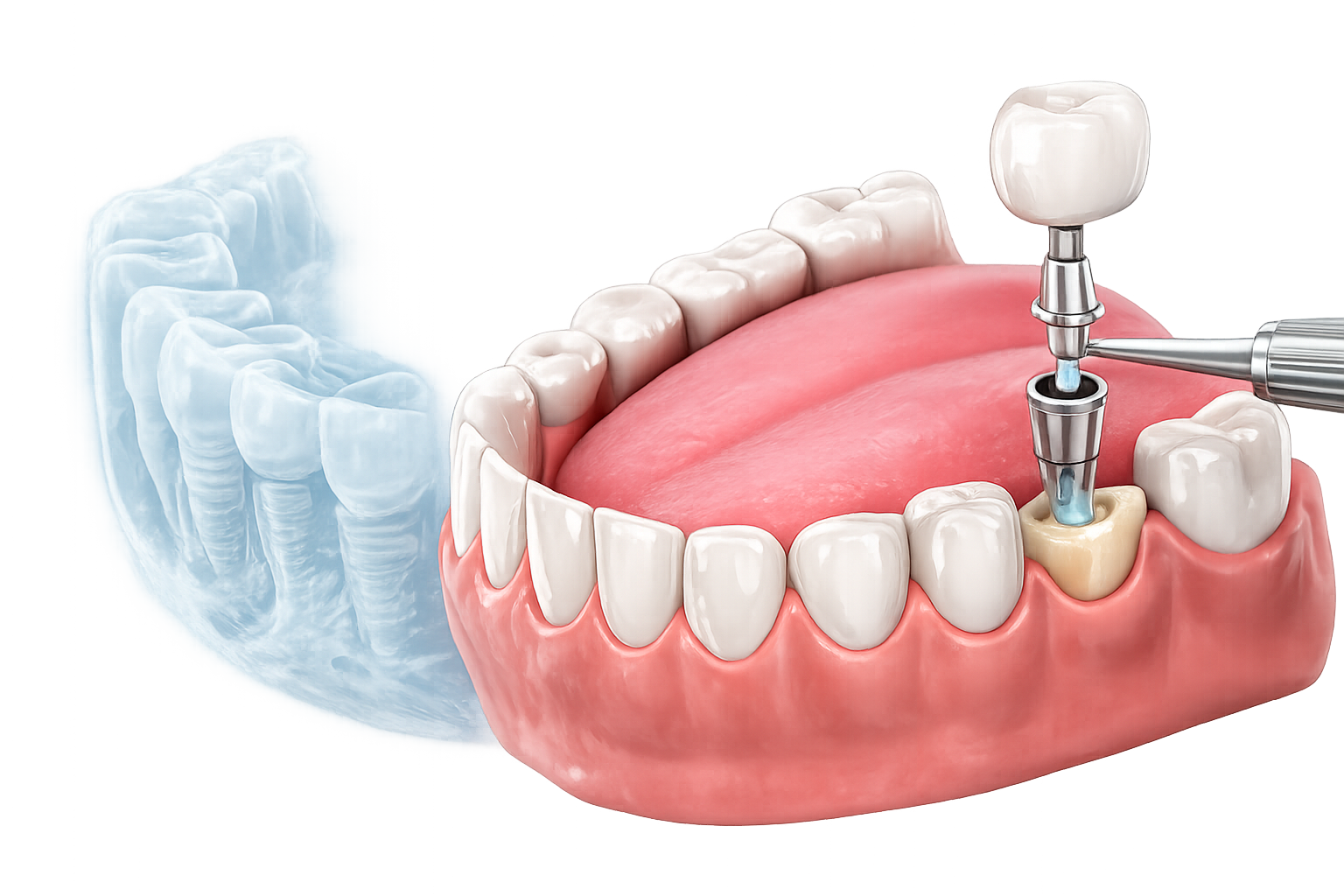
Zero damage. Healthy teeth on either side are completely undisturbed — their enamel, roots, and structure remain intact.
Bone preserved. The implant functions like a natural tooth root, stimulating bone growth and preventing the bone loss that follows tooth loss.
Crown swap only. The titanium implant is permanent. Only the crown above might need replacement after 15–20 years — quick and inexpensive.
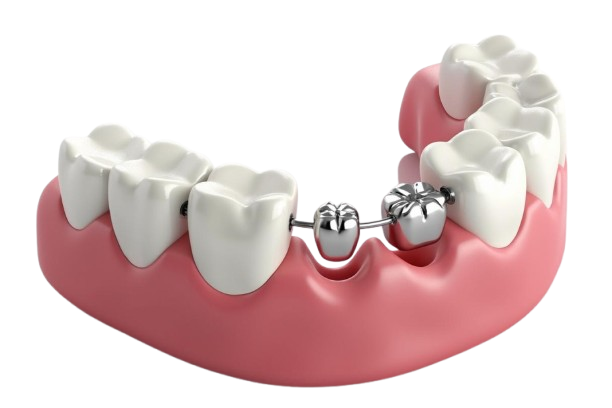
Two healthy teeth ground down. Permanent enamel removal to fit anchor crowns. Damage cannot be reversed — these teeth are now committed to the bridge for life.
Bone loss continues. The pontic (fake tooth) floats above the gum — there’s no root structure to stimulate the bone, so the underlying jaw continues to recede.
Full bridge replacement. Every 10-15 years. Each replacement cycle further stresses the anchor teeth — sometimes leading to their eventual failure.
At your consultation, Dr. Winfield will review your 3D CBCT scan, the condition of your neighboring teeth, and your health history — then tell you plainly which option serves you best, and why.
Honest dentistry means saying so when the “runner-up” is actually the better fit. A traditional bridge can make sense when:

If the adjacent teeth have large fillings, fractures, or existing crowns, a bridge restores three problems with one appliance — no healthy enamel is sacrificed.
Certain medical conditions or medications can make implant surgery a poor fit, and a bridge requires no surgical procedure.
Implants need adequate bone; when grafting is declined or contraindicated, a bridge delivers a fixed result without it.
Implants must wait until facial growth is complete, so younger patients sometimes wear a bridge in the interim.
For most patients, these five factors point clearly in one direction: the implant. But not for everyone.
An implant asks nothing of the teeth around it. A bridge asks everything of them: two healthy
teeth are shaved down to pegs to accept crowns, and that enamel never grows back. Those teeth are committed to wearing crowns for the rest of their lives — and every time the bridge is replaced, a little more tooth structure is removed. Over the years, that repeated stress can lead to decay at the crown margins, root canals, and sometimes the eventual failure of the anchor teeth themselves.
Your jawbone stays strong because tooth roots stimulate it every time you chew. An implant replaces the root, so that stimulation continues and the bone stays put. A bridge’s pontic simplyrests above the gum — the bone beneath it receives no signal and slowly resorbs. That bone loss is invisible at first, but it’s the reason older bridges develop gaps underneath and why the surrounding gumline changes shape over time.
A well-maintained implant can last for decades — frequently a lifetime — with the crown on top
occasionally refreshed. A traditional bridge typically needs full replacement every 10 to 15 years, and each replacement depends on the anchor teeth still being healthy enough to carry it.
Because an implant preserves the bone and gum around it, the crown emerges from the gumline like a natural tooth — an advantage that matters most in the smile zone. Under a bridge, gradual bone loss can create a visible shadow or gap beneath the pontic, trap food, and change the look of the restoration years before it structurally fails.
The factors that actually impact your long-term oral health and budget — head to head.
Category 01 · Impact on Healthy Teeth
Category 02 · Long-Term Bone Preservation
Category 03 · How Long They Last
Category 04 · Care Required
Category 05 · Initial Investment
$3,500
$3,000
$2,500
$12,500
If two or three adjacent teeth are missing, there’s a third option that combines the best of both: an implant-supported bridge. Two implants anchor a bridge of teeth — no natural teeth are ground down, and the bone under the restoration keeps its stimulation.
Missing five or more teeth in one arch? Replacing them individually is often the more expensive path — see our All-on-X page to learn why full-arch treatment usually wins that comparison. And if your teeth need to come out and be replaced quickly, our Teeth in a Day approach delivers fixed teeth the same day your implants are placed.
Choosing between an implant and a bridge is exactly the kind of decision prosthodontists are trained for. Dr. Jonathan M. Winfield, DDS, FACP earned his dental degree from the University of the Pacific, completed an advanced prosthodontics residency at the University of Illinois Chicago, and is a Diplomate of the American Board of Prosthodontics — a specialist in restoring and replacing teeth. Every case at Winfield Dental Group is planned with the fully digital Winplants® workflow, from CBCT imaging to precision-crafted final restorations, all under one roof in downtown San Diego.
At Winfield Dental Group, a complete single-tooth implant — post, abutment, and crown — starts at $6500, with financing available through Sunbit and monthly payments as low as $87. At your consultation you’ll receive clear, upfront pricing for both an implant and a bridge, along with an honest look at what each is likely to cost you over the next 20 years — not just this one.
Upfront, usually yes. Over 20 years, usually no. Bridges typically need replacement every 10–15 years, and the anchor teeth often need additional treatment along the way. When you total the
replacement cycles, an implant is frequently the less expensive choice — and it doesn’t put two healthy teeth at risk.
Yes — and the smile zone is where implants shine. Because an implant preserves the surrounding bone and gum, the new tooth emerges naturally from the gumline, avoiding the shadowing that can develop under a bridge over time.
The right choice depends on your teeth, your bone, and your goals — and it deserves a specialist’s eye. Get a straightforward, side-by-side recommendation from Dr. Winfield, with upfront pricing for both options.
Winfield Dental Group — Home of Winplants® 1111 6th Ave, Suite 102, San Diego, CA 92101
Winplants® is a registered trademark of Winfield Dental Group. Individual results vary; candidacy is determined after a clinical exam and 3D imaging.
"*" indicates required fields